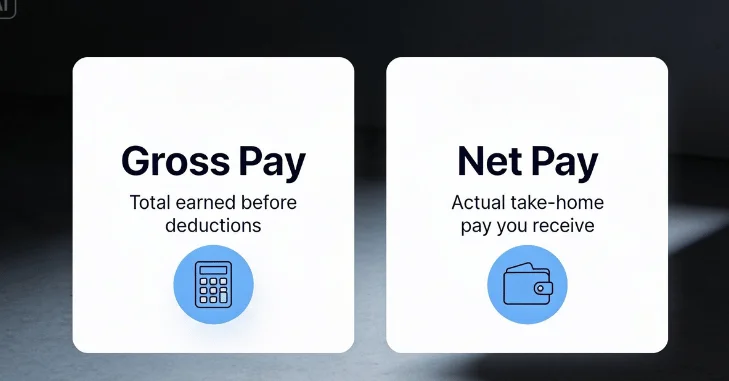
Gross pay vs net pay describes two different amounts on your paycheck. Gross pay is what you earn before deductions. Net pay is the amount you receive after taxes, benefits, and other deductions.
Gross pay is your earnings before payroll deductions. Net pay, also called take-home pay, is what remains after required and voluntary deductions. The difference can include federal income tax, Social Security, Medicare, state taxes, benefit premiums, retirement contributions, and other authorized deductions.
Key Facts at a Glance
| Question | Gross pay | Net pay |
|---|---|---|
| What does it show? | Earnings before deductions | Money left after deductions |
| Where do you see it? | Near the top of a pay stub | Near the final payment amount |
| Does it include taxes taken out? | No | Yes, as subtractions |
| Best for | Comparing salary or wages | Building a spending budget |
| Common formula | Rate × hours, or salary ÷ pay periods | Gross earnings − deductions |
Key Takeaways
- Gross earnings show what your employer owes before payroll deductions.
- Take-home pay shows what reaches your bank account or paycheck.
- Federal, state, and local taxes can reduce the amount you receive.
- Benefits and retirement contributions may also reduce the final payment.
- Taxable wages can differ from gross earnings when eligible pre-tax deductions apply.
- Employers generally do not subtract payroll taxes from your paycheck.
What Gross Pay Means
Gross pay is the starting figure on most U.S. pay stubs. It includes earnings before employee deductions are removed. Regular wages, overtime, bonuses, commissions, and certain other payments can be included.
A salaried worker can estimate gross earnings by dividing annual salary by pay periods. An hourly worker usually multiplies hours worked by the hourly rate. Overtime and other additional earnings may need separate calculations.
For many covered nonexempt workers, federal law requires overtime after 40 hours in a workweek. The federal overtime rate is generally at least one-and-one-half times the regular rate. State rules may provide additional protections.
What Net Pay Means
Net pay is the money left after payroll deductions. It is often called take-home pay. This is usually the amount deposited into your bank account.
The amount can change even when your stated salary stays the same. Withholding elections, benefits, overtime, bonuses, and garnishments can change deductions. State or local taxes can also affect the final amount.
Your paycheck may show several deduction categories between earnings and the final deposit. Reviewing those lines helps explain the difference. It also makes budgeting from your actual income easier, and moving part of that deposit into a personal savings account keeps saving separate from daily spending.
Gross Pay vs Net Pay: Key Differences on a U.S. Paycheck
The main difference is timing within payroll. Gross earnings come before employee deductions. Net earnings come after those deductions have been applied.
| Area | Before-deduction earnings | Take-home earnings |
|---|---|---|
| Taxes withheld | Not yet removed | Already removed |
| Benefit deductions | Not yet removed | Already removed |
| Retirement contributions | Not yet removed | Already removed |
| Useful for job offers | Yes. | Less common |
| Useful for monthly budgets | Less useful | Yes. |
| Usually deposited | No | Yes. |
A job offer usually states annual salary or hourly wages before deductions. Your bank account receives the after-deduction amount. That difference matters when comparing offers or planning monthly bills.
How to Calculate Gross Earnings
For a salaried employee, divide annual salary by the number of yearly pay periods. A $62,400 salary paid biweekly has 26 regular pay periods. The regular gross amount would be $2,400 per period.
For an hourly employee, multiply the hourly rate by regular hours worked. Then add any overtime, bonuses, or commissions earned in that period. Payroll rules can affect how certain extra payments enter overtime calculations.
A simple hourly example uses a $25 rate for 40 hours. Regular weekly earnings would equal $1,000 before deductions. Any eligible overtime would increase that starting amount.
How to Calculate Net Earnings
Start with the total earnings for the pay period. Then subtract applicable employee taxes and authorized deductions. The remainder is your take-home amount.
Basic Formula
Net pay = gross earnings − employee taxes − employee deductions
The calculation can be more complex than the formula suggests. Some deductions reduce taxable wages before certain taxes are calculated. Others are taken after taxes and do not reduce taxable income.
What Deductions Reduce Take-Home Pay in the United States?
Federal income tax withholding is one common deduction. The amount depends partly on earnings and Form W-4 information. The IRS Tax Withholding Estimator helps employees review federal withholding.
Social Security and Medicare taxes also reduce many employees’ paychecks. For 2026, the employee Social Security rate is 6.2% on covered wages up to $184,500. The employee Medicare rate is 1.45%, with no general wage-base limit.
Employers must also withhold an additional 0.9% Medicare tax after wages exceed $200,000 during the calendar year. That withholding threshold applies regardless of filing status. Your final tax liability can still depend on filing status and household circumstances.
Other deductions can include state income tax, local tax, insurance premiums, and retirement contributions. Wage garnishments or other authorized deductions may also apply. The exact mix depends on your location, employer, and benefit choices.
A $2,000 Paycheck Example
Suppose an employee earns $2,000 before deductions in one pay period. The example below uses simplified amounts for illustration. It is not a personalized tax calculation.
| Item | Amount |
|---|---|
| Gross earnings | $2,000 |
| Federal income tax withholding | -$180 |
| Social Security tax | -$124 |
| Medicare tax | -$29 |
| State or local taxes | -$80 |
| Benefits and retirement deductions | -$150 |
| Estimated take-home pay | $1,437 |
The Social Security and Medicare amounts use the standard 2026 employee rates. Other figures are example amounts rather than tax recommendations. Real withholding depends on your pay, W-4, location, and deductions.
This example also shows why budgeting from salary alone can mislead you. A $2,000 earnings figure does not mean $2,000 is available to spend. Your spending plan should start with the amount you can use.
Why Can Take-Home Pay Change if Your Salary Stays the Same?
Overtime, bonuses, commissions, or unpaid time can change a paycheck. Benefit elections can also change during the year. A new retirement contribution can reduce the amount deposited.
Federal withholding may change after you submit a new Form W-4. State withholding can change after a move or state form update. Some deductions also begin or end after enrollment changes.
Year-to-date tax limits can create another difference for higher earners. Social Security withholding stops after covered wages reach the annual wage base. Medicare withholding does not have the same general wage cap.
Gross Earnings, Taxable Wages, and Total Compensation Are Not the Same
Gross earnings measure pay before employee deductions. Taxable wages can be lower when qualifying pre-tax deductions apply. Different taxes may also use different taxable wage amounts.
Total compensation is broader than the number on your paycheck. It can include employer-paid health coverage, retirement contributions, or other benefits. Those employer costs do not automatically become cash in your account.
This distinction helps when comparing two job offers. A higher salary may come with higher employee benefit costs. Another role may offer stronger employer-paid benefits and a different take-home result.
When Should You Use Gross or Net Figures?
Use before-deduction earnings when comparing salaries, hourly rates, or job offers. Lenders may also request income information based on gross earnings. Always follow the lender’s documentation requirements.
Use take-home income for monthly spending decisions. Rent, groceries, debt payments, and savings come from money you receive. Building a spending plan around that figure keeps your budget tied to cash you can actually use.
Workers with extra jobs should check whether they are employees or independent contractors. Marketries’ side-hustle guide explains why status changes withholding and tax planning. A contractor payment may arrive without employee payroll withholding.
Longer-term planning can involve taxes, benefits, debt, and retirement goals together. Marketries’ Essential Considerations for First-Time Homeowners: The buyer’s guide covers broader money decisions and planning. Personal advice can be useful when your situation becomes more complex.
What to Check When Your Paycheck Looks Wrong
Start by comparing hours, pay rate, and added earnings with your records. Then review each tax and benefit deduction. Compare the current stub with the previous pay period.
Check whether you recently changed Form W-4 information or benefit elections. Also confirm whether a bonus, overtime, or unpaid absence affected the period. These changes often explain an unexpected difference.
Contact payroll or human resources when a line still does not make sense. Bring the pay stub and any relevant benefit or tax forms. Clear records make it easier to identify a payroll error.
Frequently Asked Questions
Is Gross Pay Before or After Taxes?
Gross pay is before employee taxes and payroll deductions. It represents earnings before those amounts are removed. Your pay stub usually lists deductions after the earnings section.
Is Net Pay the Same as Take-Home Pay?
Yes, net pay generally means take-home pay. It is the amount left after payroll deductions. That is usually the amount paid by direct deposit or check.
Why Is My Net Pay Lower Than My Gross Pay?
Taxes and other deductions create the gap. Common deductions include federal withholding, Social Security, Medicare, benefits, and retirement contributions. State or local taxes may also apply.
Is Gross Pay the Same as Taxable Income?
No, they are not always the same. Eligible pre-tax deductions can reduce wages subject to certain taxes. Your annual taxable income also depends on tax-return adjustments and deductions.
What Is the Easiest Way to Compare Gross Pay vs. Net Pay?
Look at one pay stub for the same pay period. Compare the total earnings line with the final payment amount. Then review each deduction that explains the difference.
The Bottom Line
Your paycheck tells a clearer story when you separate earnings from spendable income. The first figure explains what you earned before deductions. The final figure shows what you can use after payroll takes its required steps.
Use earnings figures for compensation comparisons and income documentation. Use take-home income for a realistic household budget. Review your pay stub whenever either number changes unexpectedly.
For federal withholding questions, use the IRS Tax Withholding Estimator to review your current setup. For payroll disputes, start with your employer’s payroll team and your records. Seek qualified tax advice when your situation needs personalized guidance.